


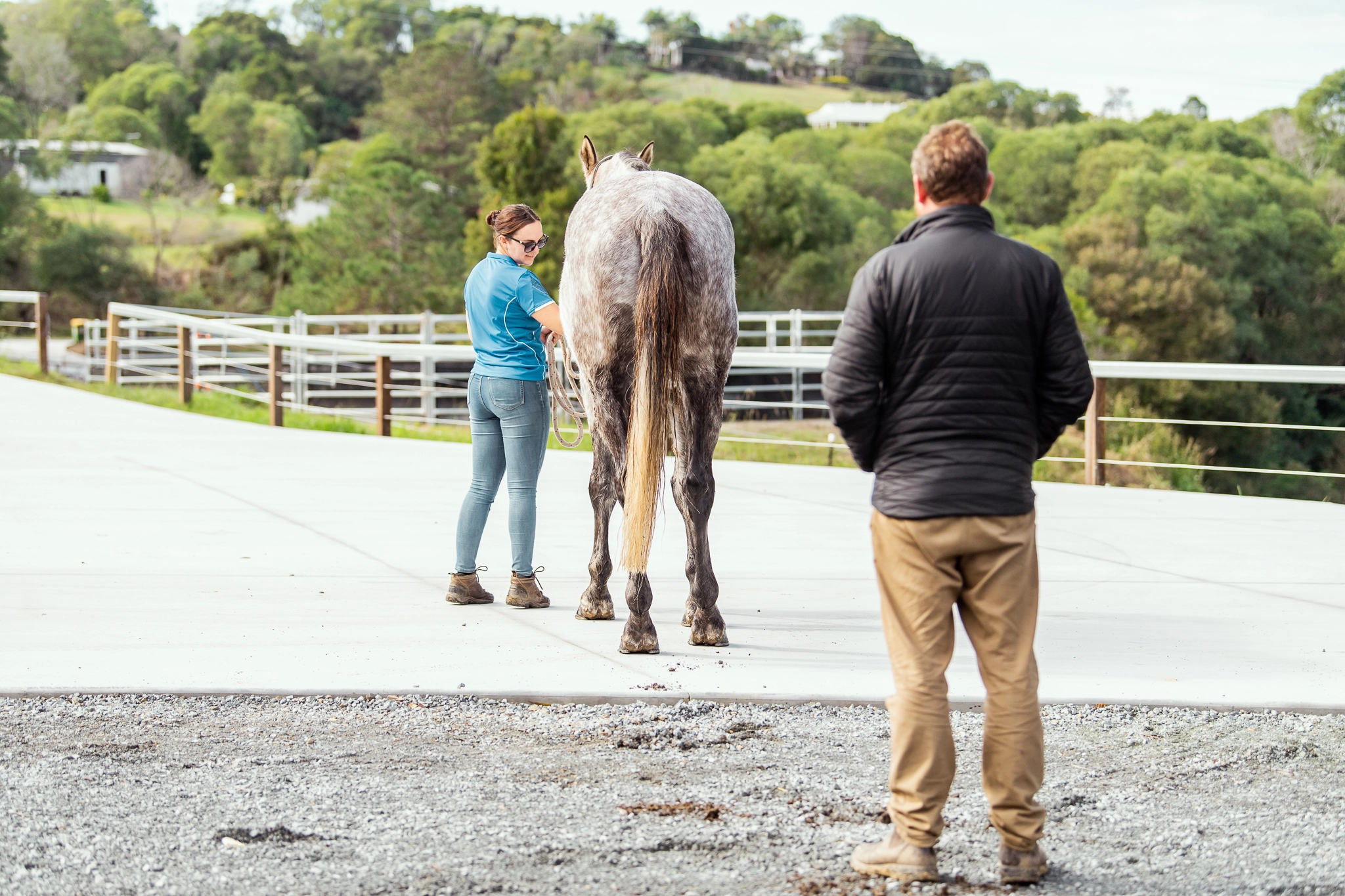
Endoscopy is the process by which a long fiberoptic camera is used to visualise the equine respiratory tract. Using this camera we can visualise the pharynx, larynx, guttural pouches and trachea in great detail and take biopsy samples for laboratory testing if required. We have three fibrescope endoscopes which can be used in a stable without a power source. Endoscopy is an essential part of evaluating horses with upper airway disease, abnormal respiratory noise and lung disease. The equine urinary tract and uterus can also be visualised with the use of an endoscope. By inserting the camera into the horse’s urethra or uterus we can visualise the insides of these organs and take biopsies if required for diagnostic testing.
1. Endoscope
Our endoscopes are predominantly used to examine the respiratory tract and can visualise the pharynx, larynx, trachea and guttural pouches. The endoscope is used to investigate abnormal respiratory noise and airway disease. Samples can be taken for analysis and culture from the trachea (trans tracheal wash) or lungs (bronchoalveolar lavage) to assist diagnosis and target treatment. We have a number of mobile endoscopes for stable side use as well as our larger video endoscope for advanced imaging.
2. Gastroscope
Horses must be up to date with Hendra vaccinations for this procedure. The scope examines the stomach lining and the Margo plicatus which separates the squamous and glandular tissue. We then continue in further to look at the pylorus.